What’s happening in our oceans?
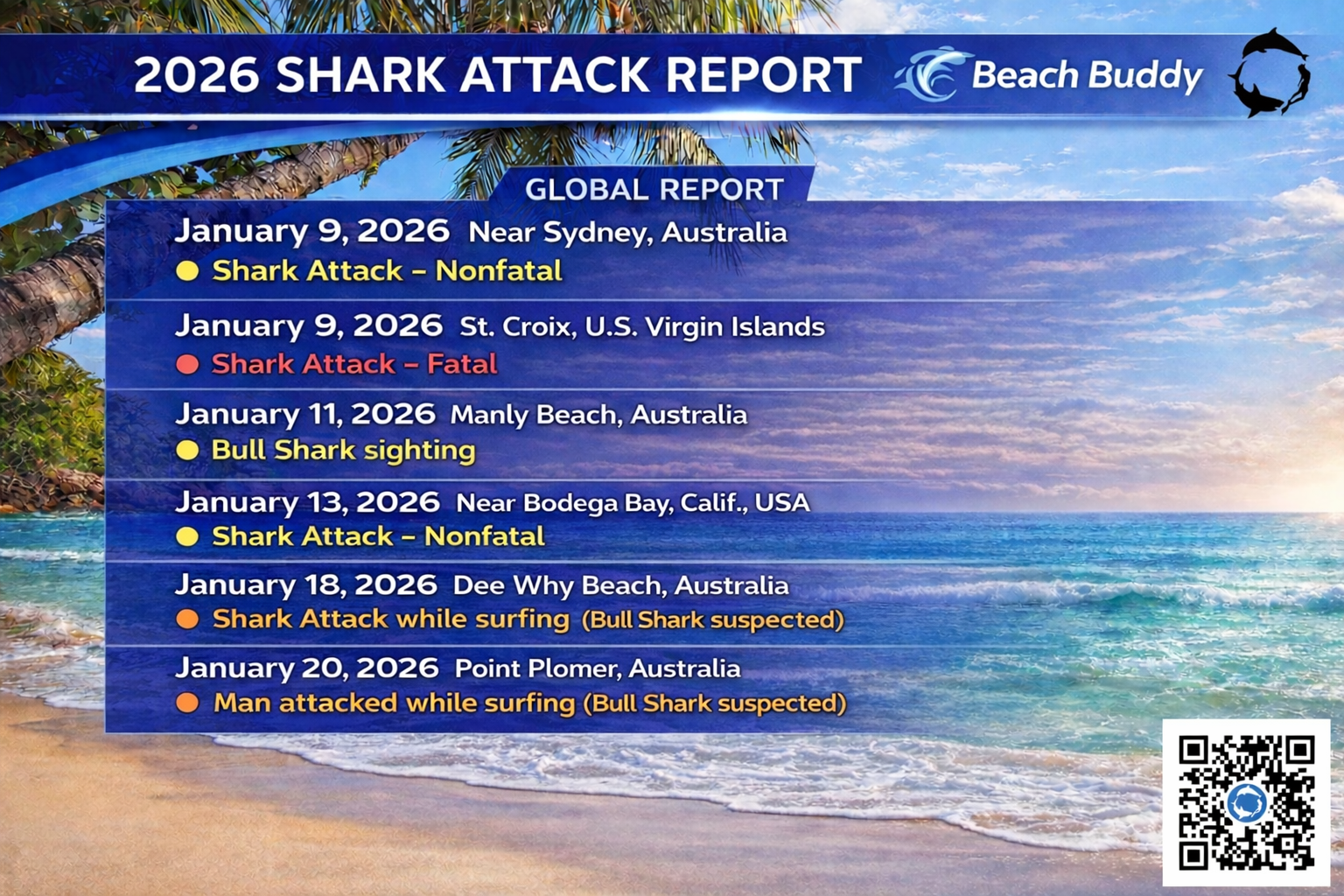
About a decade ago, we began noticing a troubling shift in the behavior of sharks. It started with changes in known territories and migration patterns. Many experts point to warming water temperatures as a likely driver. Great whites are highly tuned predators that follow prey—especially seals and sea lions—so when conditions change, everything downstream changes with them.
Another factor that has increasingly been discussed is predation pressure from orcas. Orcas are one of the few true threats great whites appear to avoid, and in some regions their presence has been linked to sharks abandoning long-used hunting grounds.
When a top predator is pushed out of its established habitat, it doesn’t simply disappear—it adapts. That often means moving into new areas, including coastlines heavily shared with people.
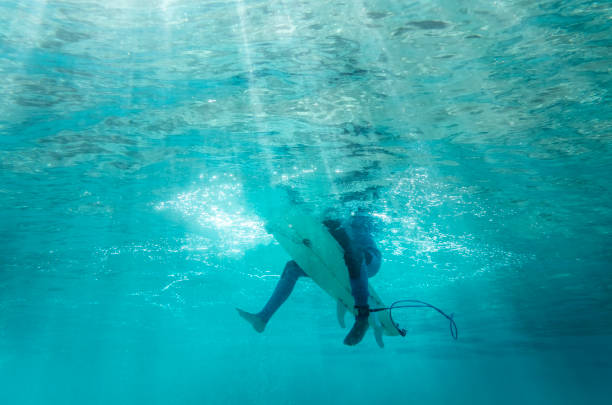
When humans enter the ocean, we step into the domain of large, powerful wildlife. In many cases, shark bites are believed to be exploratory—an investigation rather than an attempt to feed—and the person is released. But even a single bite can be catastrophic. The result is the same: a moment of overlap between people and an apex predator that can cause life-changing harm.
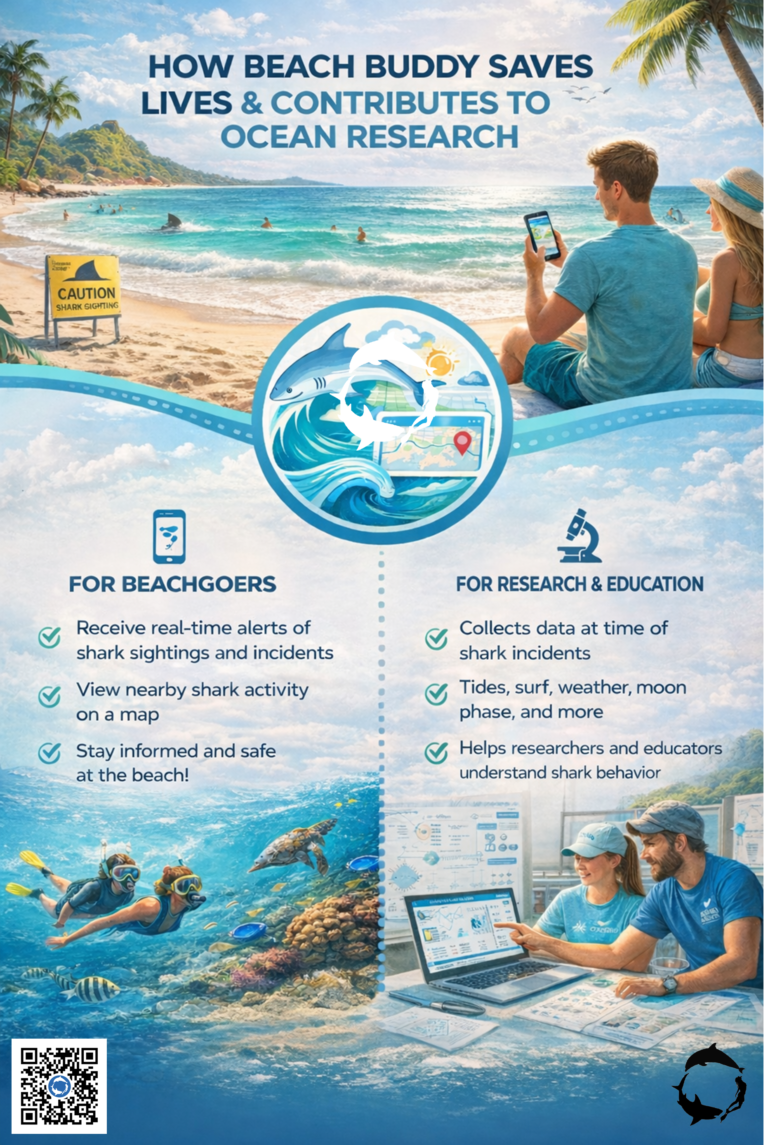
We didn’t just observe environmental changes—we felt a change in shark behavior significant enough that we acted. That work became Beach Buddy, a public safety app built to help ocean users make more informed decisions in real time.
Beach Buddy launched in December 2025, and we believe it couldn’t have come soon enough. In recent incidents, the app was still too new and not yet widely known. But the question that keeps us up at night is simple: if more people had been using a tool like this, could lives have been spared?
We believe the answer is yes—if the warnings were seen and taken seriously. For example, Beach Buddy issued a warning in Monterey County after a tagged shark was detected in the area. Anyone checking the app would have seen both the alert and the reason it was triggered. Choosing to enter the water when an apex predator is actively nearby is a personal decision—but it’s a decision that should be made with clear information, not guesswork.
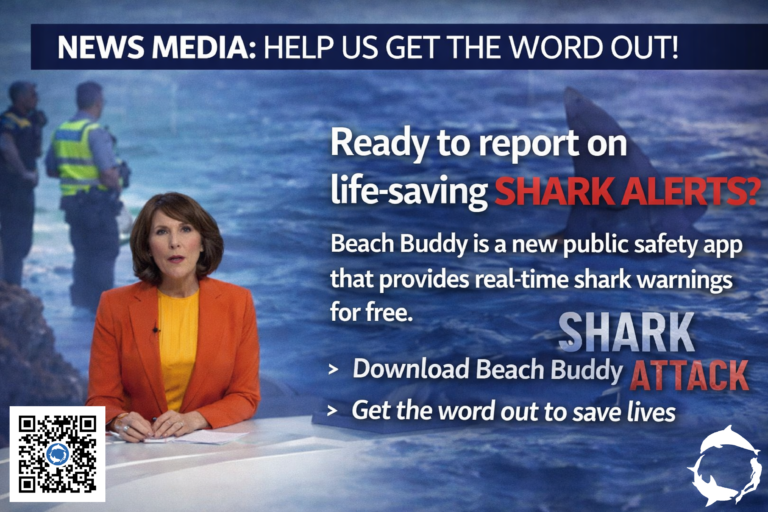
We have contacted several news and media outlets to request coverage of Beach Buddy, but haven’t yet been successful. Our goal is straightforward: to reach sources who can help inform the public that this free safety tool exists, and that it can be used today.
Beach Buddy is more than an early-warning system for marine hazards around the globe. It’s also an educational tool—and a travel companion for coastal locations—designed to help people understand a destination before they go. That includes key conditions and practical information such as weather, tides, activity in the area, and nearby services like food and local resources.
We’ve deliberately held back from making this about outrage, panic, or blame. We’re concerned about how human behavior and increasing ocean use may be affecting shark behavior over time, and we study those trends closely.
We also read the public commentary on shark posts and news articles, and we frequently see dismissive reactions like, “Big surprise—a shark in the ocean.” But that response misses the point. The ocean can be both beautiful and hazardous. Ignoring that reality doesn’t protect anyone.
These animals can exceed 1,000 pounds. They deserve respect—and we deserve the chance to reduce preventable negative interactions through awareness, education, and better decision-making tools.
Beach Buddy was born from a deep love for the ocean and its marine life. The app reflects decades of ocean experience, education, and research by its creator and developer, with one purpose: a safer future for humans and sharks alike.
We do not want increased shark encounters to lead to sharks being hunted and killed. Our fear is that without practical alternatives—tools that are widely available and that people actually use—that is the direction public sentiment may go. We want a better outcome, and we believe better awareness is part of getting there.
If you believe in ocean safety and informed coexistence, the simplest way to help is to share Beach Buddy with friends and family—especially those who swim, surf, dive, fish, or travel to coastal areas. Without awareness, even the best app can sit in an app store unnoticed.
If you have questions about our research or the app, please reach out. Beach Buddy is currently available as a free download on the Google Play Store. We’re actively working on the iOS version and expect it to be available on the Apple App Store within the next 30 days.
You can also follow us on Facebook or sign up for our newsletter through our website to be notified when the iOS version is released.
Thank you for supporting a safer, smarter ocean community—one that stays adventurous, informed, and respectful of the wildlife that makes the ocean what it is.