There is no easy way to have a conversation about shark attacks—especially fatal ones –
There is no easy way to have a conversation about shark attacks—especially fatal ones—and especially when an incident has occurred so recently. We are deeply sorry for the family and friends of Erika Fox, who are now living with an unimaginable loss. There are no words that can lessen the magnitude of their pain.
We understand firsthand the devastation that a shark attack brings, particularly when it is fatal. Families and communities are forever changed in the aftermath. What we should all be able to agree on is this: reducing dangerous interactions between humans and sharks in their shared environment is both necessary and urgent. How we achieve that—through research, education, technology, and policy—is still evolving and deserves serious, open discussion.
This is not an easy article to write, nor will it be easy to read. But it is a necessary conversation. If we avoid it, then the deaths of Erika Fox and Lucas Ransom risk becoming meaningless—and that cannot be acceptable.
The recent fatal attack on Erika Fox will inevitably reignite debate about the effectiveness of shark deterrent tools and accessories. Before addressing that, we want to be clear about my own position: sharks can be terrifying. At the same time, we fully recognize, respect, and support their critical role in maintaining healthy ocean ecosystems. These two truths can—and must—coexist.
What we cannot do is dismiss a potential part of the solution simply because it failed under a specific and extreme circumstance.
The fatal attacks on Lucas Ransom and Erika Fox share unsettling similarities. In both cases, the attacks were fast, forceful, and decisive. These were not brief investigative bites. The sharks involved did not immediately release the victims, which is often the difference between survival and fatality.
In Lucas Ransom’s case, release occurred only after catastrophic injury, which ultimately allowed his flotation device to bring him back to the surface. While full details and official findings matter and should guide conclusions, the known facts point to attacks that unfolded with extraordinary speed and force—conditions under which no currently available deterrent can be relied upon to stop a lethal outcome.
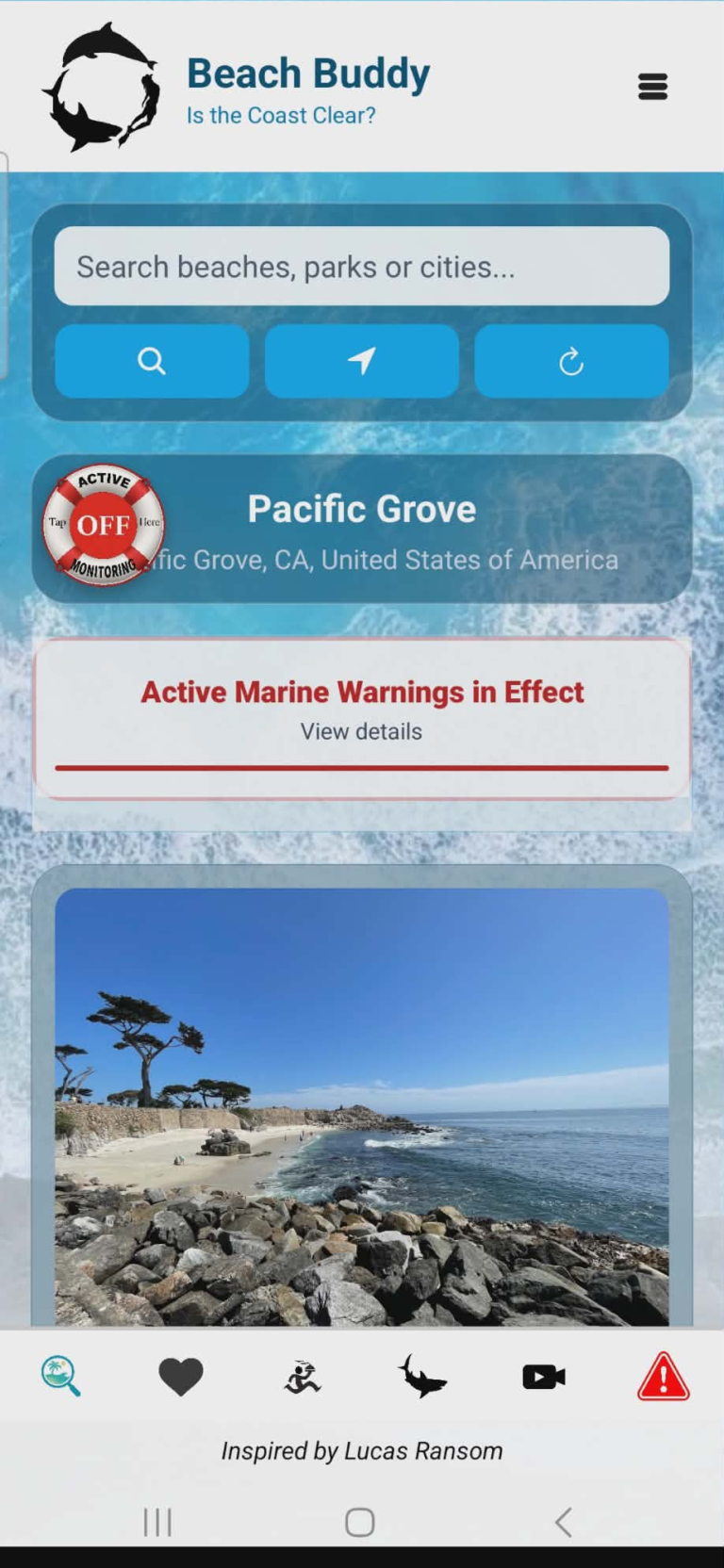
The Beach Buddy app is new to the app store so its not widely known yet. Unfortunately the app was not downloaded or used by the swimmer. The
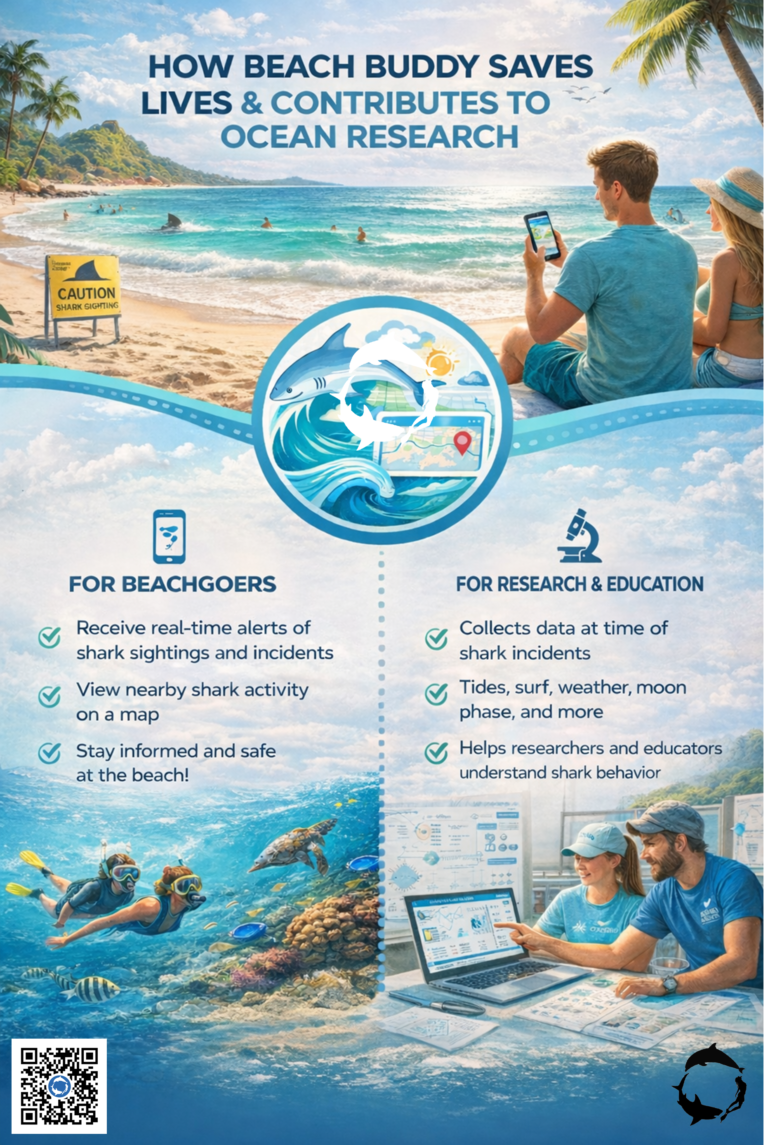
Beach Buddy App was created to add another layer of awareness and protection—to help reduce the likelihood of shark encounters before people ever enter the water. Ocean lovers are not going to stop entering the ocean because of sharks. They were here long before we were, and coexistence has always carried risk.
That said, we are concerned by patterns that suggest changing shark behavior in certain regions. While there is no guaranteed way to prevent a shark attack, risk can be reduced. Tools exist that may help, particularly when used together—but they are only effective when paired with informed decision-making.
Ignoring posted warnings, local knowledge, or real-time risk indicators—whether from signage, lifeguards, or apps like Beach Buddy—renders any deterrent meaningless. Entering the water when sharks are known to be present dramatically increases the risk of a serious encounter.
While Erika Fox wasn’t using the Beach Buddy app, she was reportedly wearing a Sharkbanz device at the time of the attack. Does that mean Sharkbanz — or similar deterrents like the Ocean Guardian Shark Shield — are useless? No. It means that nothing is guaranteed to stop a determined, high-speed great white shark attack intended to be lethal.
At an estimated burst speed of 25–30 miles per hour, a magnetic or electromagnetic deterrent has little opportunity to alter the outcome. The quality and strength of the device also matters. However, when sharks are cruising at normal speeds—typically 3–5 miles per hour—there is evidence that electromagnetic deterrents can influence behavior and reduce close approaches.
Shark deterrents are not magic shields but they are risk-reduction tools. Used consistently, and combined with situational awareness and avoidance strategies—such as checking conditions with the free Beach Buddy app before entering the water—they may very well save lives.
Reducing shark attacks is not about fear, denial, or blame. It is about education, layered prevention, and respect—for both human life and the ocean we choose to enter.
#beachbuddyapp#beachbuddy#sharks#sharkattack#ErikaFox#sharkbanz#share#protection#ocean#oceanlove#sharklove